

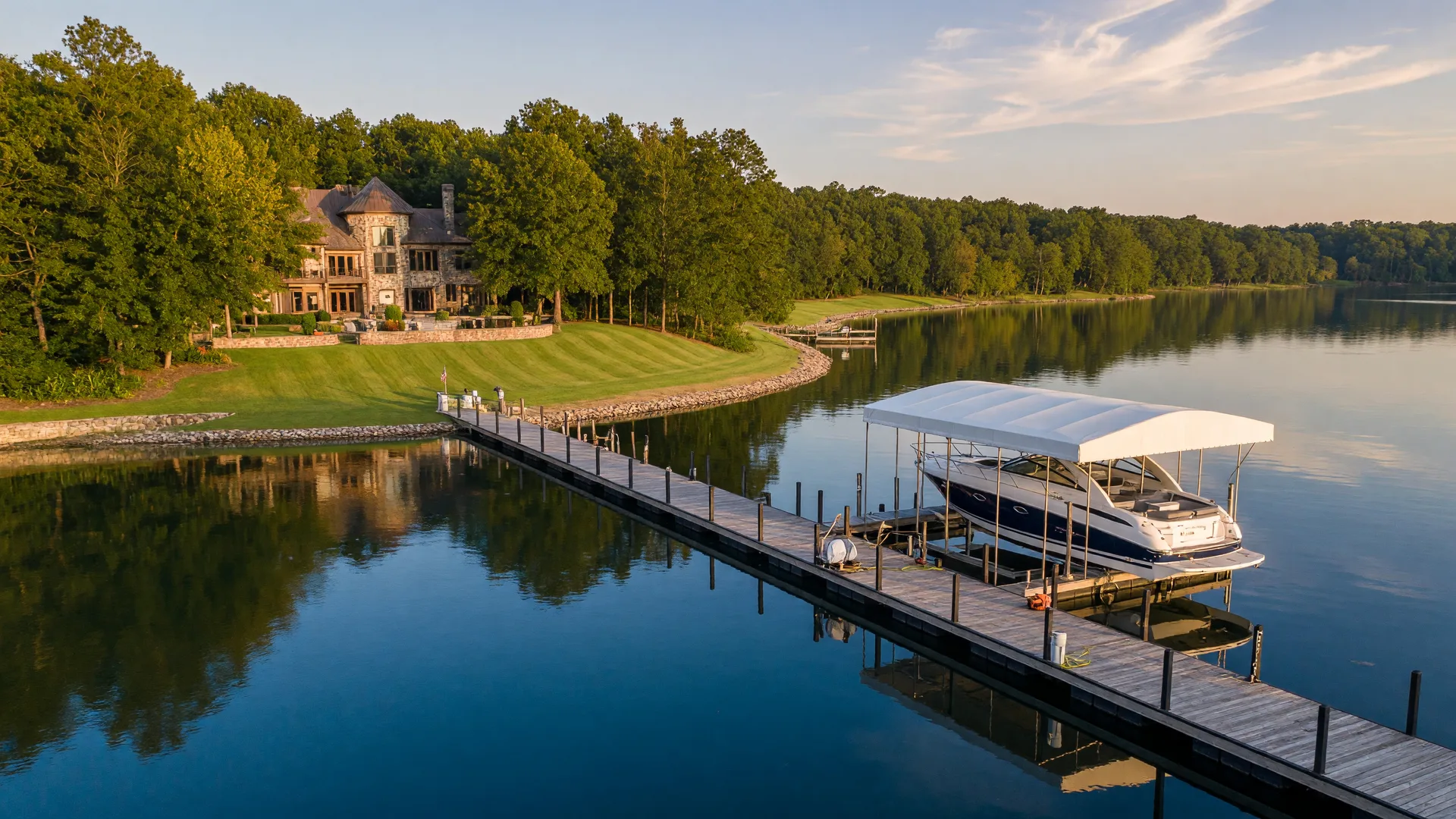
How Deep Should the Water Be at a Lake Norman Dock?
By Vic and Amy Petrenko, The Petrenko Group
This is the question we hear most often in September and October, because it is exactly the season when Duke Energy starts pulling Lake Norman down toward its winter level. A dock that floats your boat effortlessly in July can strand that same boat in November. On Lake Norman, the depth that matters is the depth at the lowest seasonal water level, not the depth at full pond. Get that number right and you have verified the single most important value driver on a waterfront property. Get it wrong, and no amount of square footage will save the sale.
Full Pool Is 760 Feet. Your Dock Has to Work Below It.
Lake Norman's normal full pool is 760 feet above mean sea level, which reads as 100 feet on Duke Energy's gauge. Duke owns the shoreline and lakebed under its FERC license and manages the lake on a seasonal operating plan, intentionally drawing the level down through fall and winter to create flood storage. The typical target range is 95 to 98 feet on the gauge, roughly 2 to 5 feet below full pond, and in dry years the annual swing can run 3 to 8 feet. The FERC-licensed maximum drawdown is far deeper, 15 feet, but it is the normal seasonal drop of a few feet that actually shapes how your dock works. Buyers who size their expectations to full pond make the classic mistake. Buyers who measure at the low-water mark buy with confidence.
What Depth Does Your Particular Boat Need?
There is no single answer that fits every slip, because the number comes from your boat and your lift. A floating boat lift needs roughly 3 feet of water below it to operate, and the boat needs its draft plus clearance on top of that. A wakeboat or inboard with a deeper draft typically wants about 4 to 6 feet of water at the dock face at full pool so the winter low still leaves enough. A 30-foot cruiser or larger is another step up, usually 5 to 8 feet at the dock face. The practical test is simple: put the boat on the lift, then picture the lake 3 to 5 feet lower. If the hull still clears, your depth works. If it touches, you own a summertime dock, and summertime docks quietly limit the value of a waterfront home.
Coves and Channels Answer the Question Differently
Coves and main channel locations hold depth very differently. A deep-water channel stretch in Cornelius or Mooresville tends to hold its depth through the drawdown, which is part of why main channel properties carry a 15 to 25 percent premium over comparable cove homes across waterfront price ranges from roughly $800,000 to $6 million and above. Some coves, including stretches near Governors Island, The Peninsula, and The Point, hold water beautifully all year. Others silt in noticeably during low-water years, so a cove that reads generous in spring can shallow out by October. We know which coves hold and which do not, and we measure rather than assume. That single habit has saved more than one buyer from paying a waterfront premium for a slip that cannot hold their boat.
The 760 Line, Permits, and What Moves at Closing
Depth and permits run together. Duke Energy's Shoreline Management Program requires a Lake Use Permit for every dock, lift, and pier, with the permit tied to the deed of the property. Permits generally allow a dock to extend toward deeper water up to one-third of the distance to the opposite shore, capped at 120 feet from the 760-foot full-pond contour, with coverage capped near 600 square feet and 10-foot property setbacks. Because those limits are measured from the 760 line, a properly permitted dock is often positioned exactly where the water gets deep enough to matter. When we represent a buyer, we verify permit status before we ever discuss price. Unpermitted or oversized docks surface at closing as delays, re-engineering costs, or deal breakers.
Why Depth Is the First Thing We Verify
With more than 158 homes sold and a decade advising Lake Norman waterfront buyers and sellers, we still start every waterfront engagement by verifying the water. Depth is the classic hidden problem, and our military background taught us to anticipate problems before they become costly. We pull the lake level history, walk the dock at the end, check the lift against the boat, review the permit, and compare the depth profile against recent sales in your exact neighborhood. That is the white-glove preparation we bring to every transaction, and it is why our clients move with confidence instead of guesswork.
If you are buying a waterfront home, or wondering whether your current dock depth supports the value you hope to sell, we would welcome the conversation. Contact Vic and Amy Petrenko at The Petrenko Group, and we will help you verify the depth, the permits, and the real market value before you commit.
Committed to Your Success. Ready to verify the water depth and value of a Lake Norman waterfront property? Contact Vic and Amy Petrenko at The Petrenko Group.