

Why We Attend Every Home and Septic Inspection for Our Buyers
By Vic and Amy Petrenko, The Petrenko Group
If you have bought a home before, you know the routine. An inspector arrives, walks through the property, and produces a report. In most transactions, the buyer's agent is not there. They are at their office, at another listing, or somewhere else entirely, waiting for the inspector's PDF to show up in their inbox so they can forward it along.
We do not do that. At The Petrenko Group, we attend every home inspection and every septic inspection for our buyers. Not occasionally, not when it is convenient, every single time. And the difference it makes, particularly for waterfront and luxury properties on Lake Norman, is significant.
Why Presence Matters
A home inspection report is a useful document. But a report is a summary, and summaries leave things out. An inspector's job is to evaluate the visible, accessible components of a property and document what they find. What the report cannot always capture is context, the nuance of how an issue was discovered, how the seller or listing agent responded in real time, or whether a particular concern is a routine maintenance item or something that signals a deeper structural problem.
When we are physically present during the inspection, we can ask questions in the moment. We can ask the inspector to look more closely at something that catches our eye. We can observe how the seller's agent handles findings, and we can begin forming a strategy, in real time, for how to protect our buyer's interests before the negotiation window opens.
Most agents never see this part of the process. They rely on the report and then call their buyer to discuss it. By the time they do, the opportunity to gather additional information or clarify findings has passed. That gap, between what is in the report and what happened in the house during the three hours the inspector was there, is where problems get missed.
Why It Matters Even More on Lake Norman
Waterfront properties on Lake Norman are not like typical suburban homes. They come with a set of inspection considerations that most general inspectors do not cover in a standard evaluation, and most buyer's agents do not know to ask about.
Septic systems are the first area where our presence makes a meaningful difference. Many Lake Norman waterfront homes rely on private septic systems. These systems are complex, expensive to replace, and regulated differently than you might expect, particularly for properties near the lake, where the proximity to water creates additional environmental compliance requirements.
A standard septic inspection evaluates the tank and basic function. But on Lake Norman, there are additional questions worth asking: What is the age of the drain field? Has the system been pumped on a regular schedule? Are there any signs of field failure, such as standing water, lush patches of grass over the drain field, or slow drainage throughout the home? Is the system compliant with current Iredell County, Mecklenburg County, or Catawba County regulations, or was it installed under older standards that may require upgrades?
When we attend septic inspections, we walk the property with the inspector. We look at the drain field. We ask about the soil conditions and the system's history. And when something comes up, which it does more often than most people realize, we are there to understand it immediately, rather than reading about it in a report two days later.
The Dock and Waterfront Infrastructure
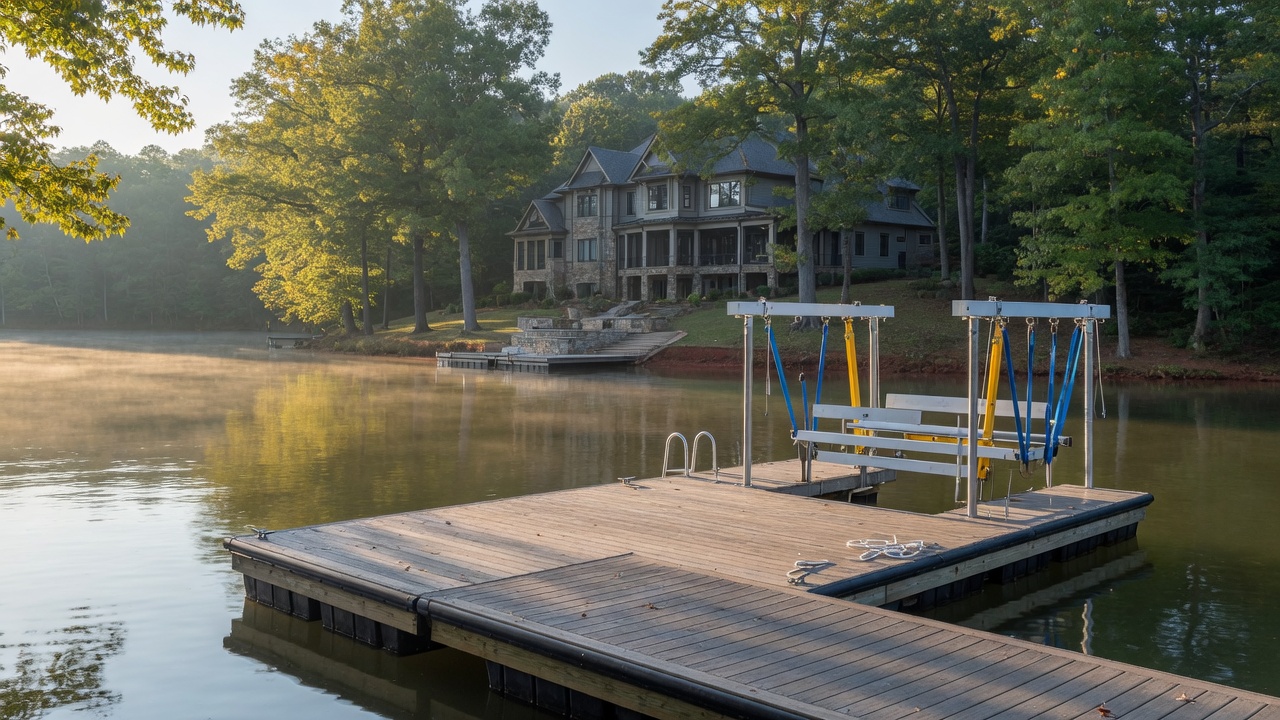
A standard home inspection does not cover the dock, boat lift, seawall, or waterfront infrastructure. Yet for many Lake Norman buyers, these are among the most valuable, and most vulnerable, components of the property.
During our walkthroughs, we evaluate the dock and waterfront structures informally alongside the buyer. We look for visible signs of wear, piling deterioration, hardware corrosion, and storm damage. We check whether the dock appears to comply with current Duke Energy shoreline management guidelines. And we ask the critical question: when was this dock last inspected, permitted, or upgraded?
Duke Energy manages the shoreline on Lake Norman, and dock permits are required for construction, modification, and significant repairs. An unpermitted or non-compliant dock can create complications during a sale, and an unexpected expense for the buyer after closing. Knowing the dock's status before you commit to a purchase is essential.
Finding the Issues That Reports Miss
Over the years, our presence at inspections has uncovered issues that never would have surfaced through a report alone. We have seen inspectors note that a water heater was "functioning normally" while the buyer's nose, because they were standing right there, detected a faint gas odor that warranted a call to the utility company. We have watched an inspector discover a foundation crack that the seller had repaired cosmetically but never addressed structurally. We have been present when an electrical panel showed signs of a recall, a concern that might have been buried in a footnote of the report but that we raised immediately.
None of these findings were catastrophic. All of them were negotiable. And every single one of them was easier to address because we were there, in the moment, with the inspector and the property in front of us.
Water intrusion near the foundation is another common finding that benefits from in-person evaluation. On Lake Norman, where many homes sit on sloped lots with significant elevation changes between the street level and the water level, drainage patterns and water intrusion risks are more complex than a typical residential property. We have learned to recognize the early signs, staining on basement walls, efflorescence on concrete, moisture meters reading higher than expected, and to have those findings addressed immediately during the inspection rather than waiting for them to become a post-closing surprise.
How This Protects Our Buyers
Our role at the inspection is not to replace the inspector. It is to be a second set of experienced eyes, someone who understands real estate contracts, negotiation, and the specific complexities of Lake Norman properties, standing alongside the buyer during one of the most important moments of the transaction.
Here is what our presence accomplishes:
- Immediate clarification. Questions get answered on the spot, not days later through email chains.
- Better negotiation leverage. We enter the repair negotiation phase with firsthand knowledge of the findings, not just a summarized report.
- Strategy formation. We begin developing our inspection response strategy during the inspection itself, giving us a head start on protecting the buyer's interests.
- Vendor coordination. If a specialized follow-up inspection is needed, for structural, electrical, or septic concerns, we can schedule it immediately rather than losing days.
- Emotional support. Buying a luxury home is an emotional experience. Being there during the inspection helps buyers process the findings in context, with an advisor they trust standing next to them.
What Competitors Do Differently
We want to be straightforward about this because it is one of the things that distinguishes how we serve our clients.
Many agents, even successful ones, do not attend inspections. The common practice is to send the buyer, rely on the inspector's report, and handle the rest from the office. For years, this has been accepted as normal in the industry.
We believe it is inadequate, especially for waterfront and luxury properties where the complexity of the asset demands more than a passive approach. The cost of missing a significant finding during inspection is not just financial. It is the stress, the uncertainty, and the erosion of trust that follows when a buyer discovers something after closing that they wish someone had caught earlier.
Our military background shaped this approach. In any high-stakes operation, the leader does not delegate presence. You show up, you observe, you assess, and you make decisions with the best available information. Real estate transactions, particularly six- and seven-figure ones, deserve the same discipline.
The Bigger Picture: Anticipating, Not Reacting
Attending inspections is one expression of a broader philosophy that guides everything we do at The Petrenko Group: we anticipate problems before they become costly. Most agents react to issues after they surface. We work to identify and address them before they reach that point.
That means researching the property thoroughly before we show it. It means understanding dock permits, septic history, and flood zone status before the offer is written. It means being present during the inspection, present during the repair negotiation, and present at closing. At no point in the process do we hand off our client to someone else and hope for the best.
It is more work. It takes more time. And it is the reason our clients consistently tell us they felt informed, protected, and confident throughout the process, even when the inspection uncovered something unexpected.
What This Means for Sellers, Too
Sellers often ask us why they should care about the buyer's inspection process. The answer is simple: when the buyer's agent is knowledgeable and engaged during the inspection, the negotiation that follows tends to be more professional, more reasonable, and more efficient. Sellers benefit from working with agents on both sides of the transaction who understand the property, the findings, and the appropriate response.
When you list your home with The Petrenko Group, you are listing with agents who understand the inspection process from both perspectives. We prepare our sellers for what to expect, advise them on pre-listing inspections when appropriate, and manage the inspection phase with the same strategic care we bring to every part of the transaction.
Questions to Ask Your Agent
If you are considering buying a waterfront or luxury home on Lake Norman, here are a few questions we recommend asking your agent, or any agent you are interviewing:
- Will you attend the home inspection in person?
- Will you attend the septic inspection if the property has a private system?
- Do you evaluate dock and waterfront infrastructure during the inspection?
- How do you handle inspection findings in your negotiation strategy?
- Have you represented buyers on Lake Norman waterfront properties before?
The answers to these questions will tell you a great deal about the level of service you can expect.
We Are Here When You Need Us
At The Petrenko Group, who you work with matters, and that is never more true than during the inspection and due diligence phase of your transaction. This is where the details live, where problems are caught or missed, and where the value of experienced, attentive representation becomes clear.
We show up. We observe. We protect your interests. And we make sure you understand the property you are buying, not just what is in a report, but what is in the home, under the home, and around the home.
If you are buying a waterfront or luxury home on Lake Norman and you want a team that will be present, engaged, and thorough throughout the entire process, we welcome the conversation. That is what we are here for.
Committed to Your Success. Contact Vic and Amy Petrenko at The Petrenko Group.