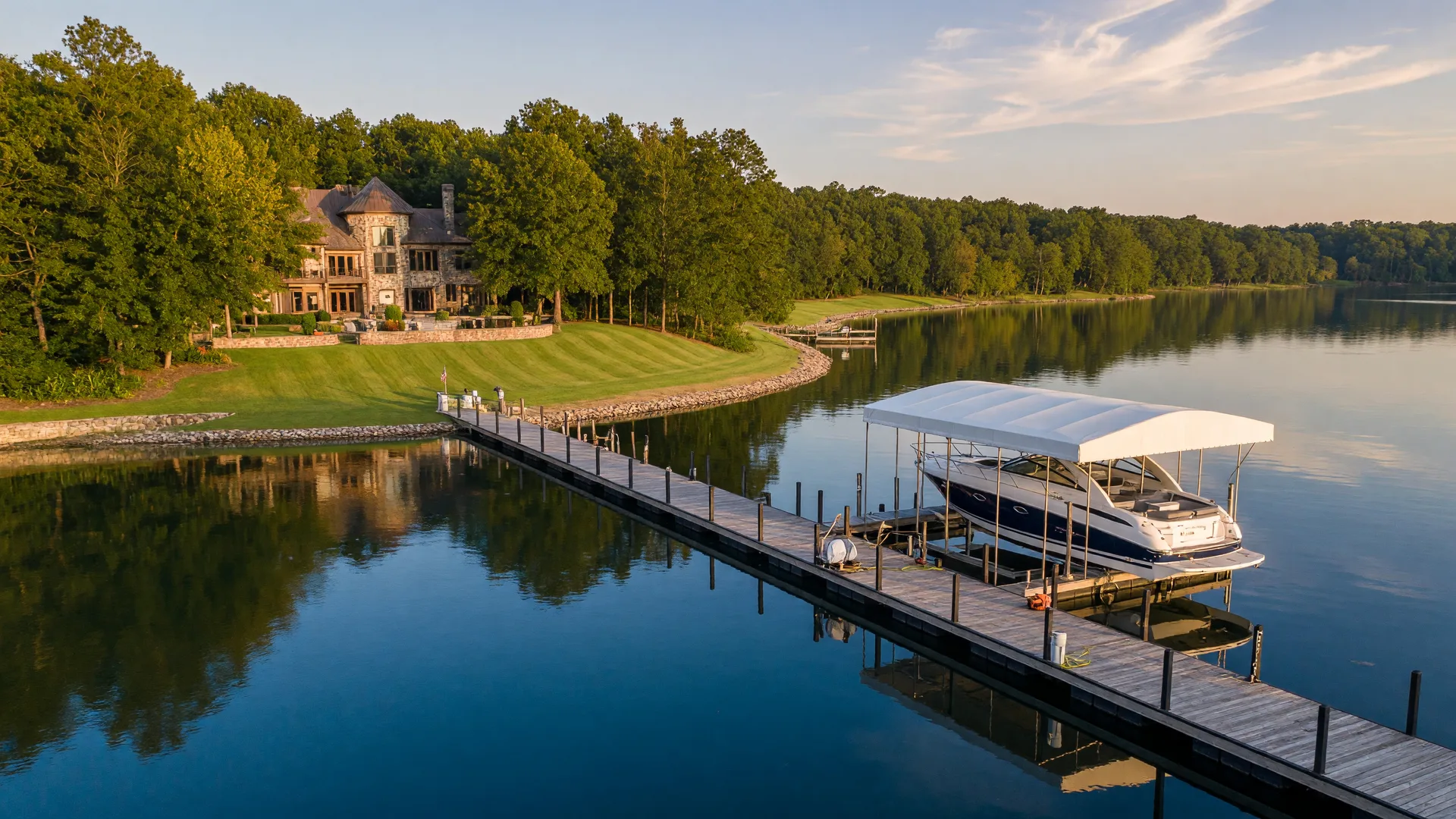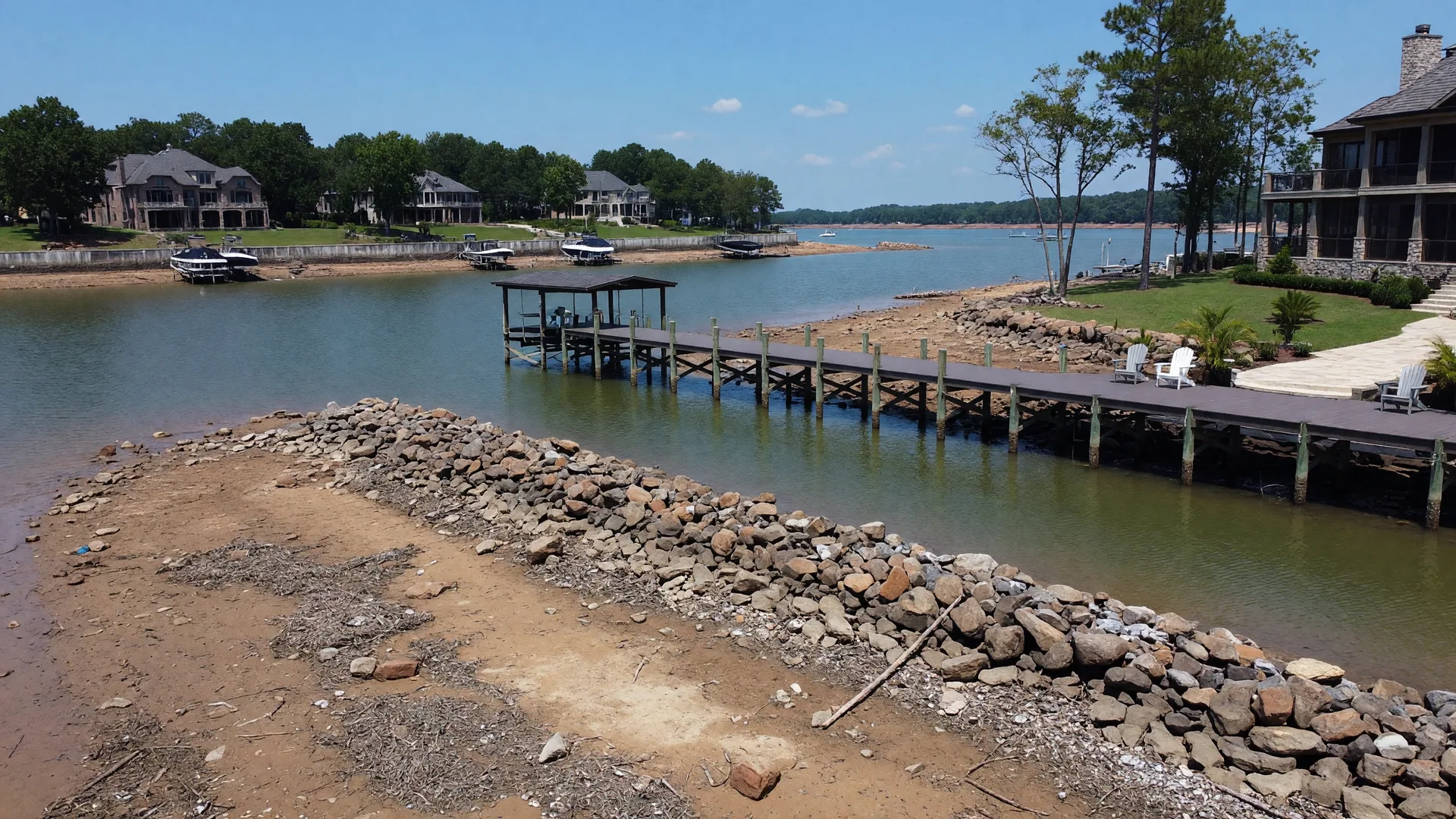

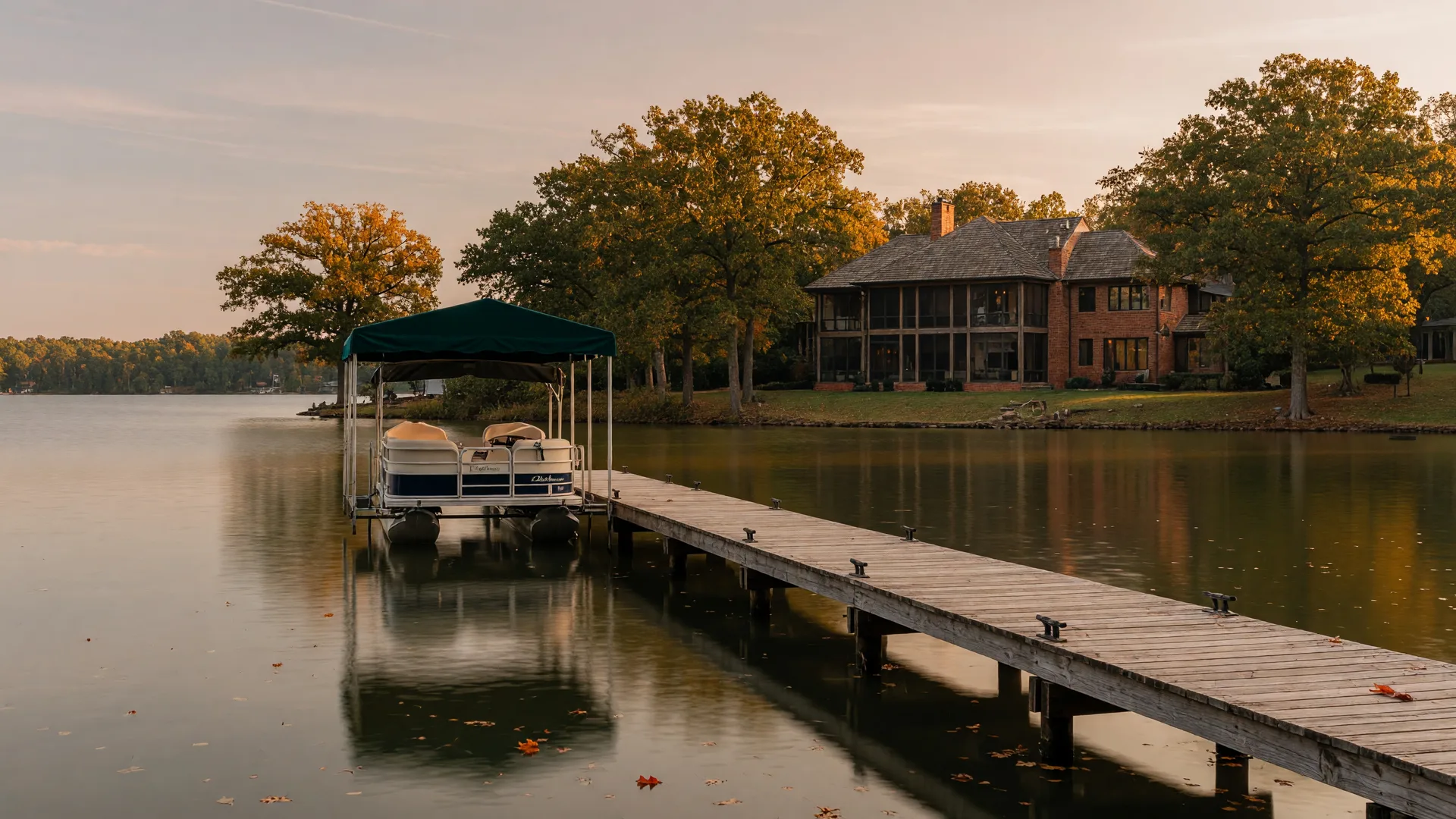
September on Lake Norman is when the water starts talking to everyone who owns a piece of it. Boat traffic thins, mornings turn crisp, and the lake begins its slow seasonal settle toward its winter level, typically dropping about two to four feet below full pond. For waterfront homeowners, buyers, and sellers, that change is not a background detail. It brings the most revealing inspection window of the year, a to-do list that protects your dock and boat, and timing questions that can affect what a waterfront property is worth.
In this fall 2026 update, we walk through what the seasonal drawdown means, how to winterize your dock and boat before the first hard freeze, what buyers should look for while the water is low, and why sellers should think about listing timing differently this autumn. We also share a little of what makes the quieter season at the lake such a good time to live here. If you have watched the lake drop every year and wondered what it means for your property, this one is for you.
The Seasonal Settle: Why Lake Norman Drops Every Autumn
Lake Norman is a managed reservoir, and its water level is never an accident. Duke Energy operates Cowans Ford Dam under a federally regulated seasonal operating plan that stores water through the summer and then gradually lowers the lake each fall and winter. The winter level gives the shoreline room for heavy storm inflow, supports operational needs at the McGuire Nuclear Station, and gives lakefront owners a chance to reach structures that sit below the summer surface.
In a typical year, the lake peaks near full pond, around 100 feet, during the warm months, then settles to winter operating targets commonly around 96 to 98 feet. That two-to-four-foot drop changes everything at the waterline: boat lifts that float comfortably in July can sit shallow by November, shorelines that stayed submerged all summer stand fully exposed, and dock cables have to do different work than they did in June. The owners who do best with waterfront property are the ones who treat September, October, and November as maintenance months, not just boating months. Weather forecasts and Duke Energy's published lake-level targets give plenty of notice, so there is no reason to be caught off guard by the drop.
Fall Is the Best Inspection Season: What the Lower Water Reveals
For buyers, the falling lake is an open book. During the summer, much of a waterfront property's condition hides below the surface. Once the lake drops, the same shoreline reveals details that are simply unavailable at full pool. We schedule many of our fall waterfront showings specifically around lower water, and we recommend every serious buyer do the same.
Shoreline and Seawalls
With the water down, walk the full shoreline slowly. Look for signs of erosion where the yard meets the lake, gaps or cracks in a seawall, displaced stone, and areas where fill may have washed away. A shoreline that looks pristine at high water can expose real maintenance needs at low water, and those are exactly the costs that show up later for the owner. In our experience, the properties that hold value best are the ones where the shoreline was installed and maintained properly, not just the prettiest.
Dock Footings, Pilings,and Boat Lifts
Lower water lets you see how a dock actually lands. Concrete piers that appear level at full pool can reveal settlement or heaving when the water drops. Wood pilings that stay hidden all summer can dry out and show rot, checking, or insect damage once exposed. And boat lifts that barely clear the water in July can sit on the bottom in a shallow cove by December, which is the kind of detail that matters for any buyer planning to keep a boat at the property.
The takeaway: approach fall showings as due-diligence sessions, not just pretty walks down the pier. Bring a flashlight, wear shoes that can handle a muddy shoreline, and ask about photos from prior low-water seasons. And if you are considering a property now, our guide to evaluating low-water conditions on Lake Norman walks through what to check at the waterline in detail.
The Dock To-Do List: Winterize Before the First Hard Freeze
For owners, fall is when you protect the biggest components of your waterfront investment. Marine professionals recommend booking boat winterization by late September or October, before the first hard freeze, because appointment slots fill fast across the lake. Here is the seasonal checklist we share with our own waterfront clients:
Winterize the boat. A proper layup includes draining the engine block and manifolds, fogging the cylinders, changing oil and filters, and running fuel stabilizer through the system. Boats that sit unused all winter without winterization risk cracked blocks and costly spring surprises, so this is not the place to cut corners.
Tune up the dock. Inspect and tighten cables and bolts, and loosen or adjust dock cables if needed so the floating dock can ride the lower water without binding or hanging. Drain water lines and pumps, remove or drain dock boxes and deck items, clean debris and algae away from float tanks,and if a boat will stay on a lift, keep the lift in the up position rather than sitting in the water. These steps take an afternoon and protect equipment that is expensive to replace in the spring.
Mind the permits. Any permanent change to your dock, pier, or shoreline requires a Duke Energy lake-use permit through its Shoreline Management Plan, so if your inspection reveals repairs that look structural, start the conversation early rather than assuming the work can begin immediately. The permitting timeline is part of the waterfront ownership calendar, just like boat registration and insurance
For Sellers: Turn the Quiet Season into an Advantage
Many sellers assume the market sleeps once the docks drain, but fall on Lake Norman tells a different story. Serious buyers do not disappear in the cooler months. They are often relocating on a timeline, cashing out of another market, or ready to transact before the holidays, and they tend to be better qualified than summer browsers. Meanwhile, waterfront inventory historically tightens as owners choose to wait for spring, which means less competition for the sellers who list now. That combination of fewer, more serious buyers can work in a well-priced seller's favor.
There is also a visual argument for listing early autumn. The shoreline, exposed by lower water, shows buyers exactly what they are buying, which reduces surprises later in the transaction. When we present a waterfront property, we frame the low-water condition as an asset: here is the genuine shoreline, here is how the dock lands, here is the real water depth. Buyers appreciate that candor,and it builds confidence during negotiations.
If your plan is to list in the spring, use this fall to get ahead: address dock repairs now while they are visible, touch up the seawall, refresh landscaping along the shoreline,and photograph the property from the water while the trees still hold color. The properties that launch into spring fully prepared consistently outperform the ones that list hastily. And with the lake scheduled to refill toward full pool through the winter months,the spring presentation takes care of itself.
Local Flavor: The Quieter, Richer Season at the Lake
Fall is also when Lake Norman feels most like a community rather than a summer destination. The ramps thin out, coves turn glassy on weekday mornings,and the lakefront dining scene keeps reinventing itself. One of the most talked-about projects in the pipeline, the multi-million-dollar Vitale Lakeside,is transforming the former Queens Landing site along River Highway in Mooresville into a full-service waterfront restaurant concept with a floating bar,giving boaters a new dock-and-dine destination to look forward to this fall. And word around the lake is that Shuckin' Shack Oyster Bar,a Carolinas seafood favorite,has been reported scouting the Denver and Lake Norman area fora franchise location,which would give the western shore another laid-back spot for raw oysters and cold beer after a fall day on the water.
Beyond dining, harvest season brings a slower, more local rhythm: farm stands pop up along rural roads, neighborhoods hold fall gatherings, concerts shift from the big summer stages to smaller lakeside rooms,and weekend mornings stay perfect for dockside coffee. It is the season that reminds us why we chose Lake Norman to call home after 31 years of moving around the world: quiet boats, golden light, honest shorelines,and neighbors you actually know. If you are thinking about making the lake your home, fall is a wonderful time to visit, ride along the water,and see the communities at their most real.
And when you are ready to talk waterfront, we are ready to listen. Reach out anytime for a private conversation about your goals,whether that means buying, selling, planning a winterization project,or simply understanding what the lake levels mean for your family's future. Committed to your success,
Getting Your Waterfront Property Ready for Fall?
Whether you are buying, selling, or preparing your dock for the cooler months, The Petrenko Group provides the strategic guidance and waterfront knowledge that luxury clients deserve.
Vic and Amy Petrenko | Global Real Estate Advisors
Premier Sotheby's International Realty
Vic and Amy: 910.916.4305
Who you work with matters.